
Best Cybersecurity Trends
Introduction
The digital world is changing rapidly, and businesses are becoming increasingly dependent on cloud platforms, artificial intelligence, connected devices, digital payments, and online services. As organizations move more operations online, cyber threats are also becoming more sophisticated. This makes cybersecurity a critical part of modern business strategy rather than simply an IT function.
The Cybersecurity Trends emerging in 2026 reflect this changing environment. Businesses are focusing on stronger identity protection, artificial intelligence, zero-trust security, cloud protection, data privacy, automated threat detection, and improved employee awareness. At the same time, attackers are using automation and AI to discover vulnerabilities and create more convincing attacks.
For organizations of every size, understanding the latest Cybersecurity Trends can help improve security planning, protect sensitive information, reduce operational risks, and build customer trust.
This guide explores the major Cybersecurity Trends in 2026, their benefits, practical strategies, challenges, and the future direction of digital security.
What Is Cybersecurity?
Cybersecurity refers to the technologies, processes, policies, and practices used to protect computers, networks, applications, devices, and data from unauthorized access, attacks, damage, or disruption.
Modern cybersecurity covers several areas, including:
- Network security
- Cloud security
- Application security
- Endpoint security
- Identity and access management
- Data protection
- Security monitoring
- Incident response
- Cyber risk management
- Employee security awareness
The purpose of cybersecurity is not only to prevent attacks. A strong cybersecurity program should also help organizations detect suspicious activity, respond quickly to incidents, recover systems, and reduce the possibility of future attacks.
As businesses adopt new technologies, Cybersecurity Trends continue to evolve alongside them.
Top Cybersecurity Trends in 2026
1. AI-Powered Cybersecurity
Artificial intelligence is one of the most important developments influencing cybersecurity in 2026.
Security teams can use AI to analyze large amounts of security data, identify unusual behavior, prioritize alerts, and support faster investigations. Traditional security systems can generate huge numbers of alerts, making it difficult for security professionals to identify the most important threats.
AI can help analyze these signals and identify patterns that may indicate malicious activity.
AI is also being used for:
- Automated threat detection
- Behavioral analysis
- Security monitoring
- Malware analysis
- Fraud detection
- Vulnerability identification
- Incident investigation
However, AI is not only being used by defenders. Cybercriminals can also use AI to automate attacks, create convincing phishing messages, analyze stolen information, and improve social-engineering techniques.
This makes AI a major focus among Cybersecurity Trends in 2026.
2. Zero Trust Security
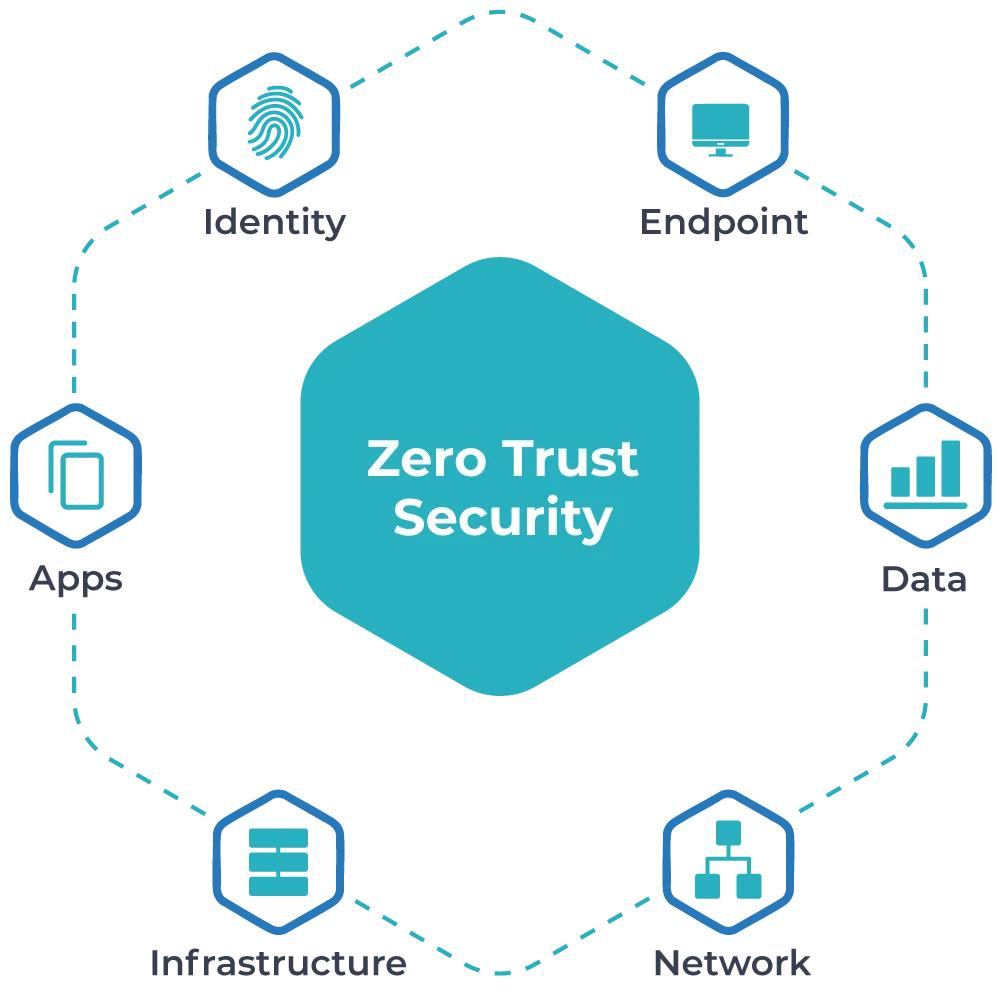
Zero Trust continues to become an important security strategy for organizations.
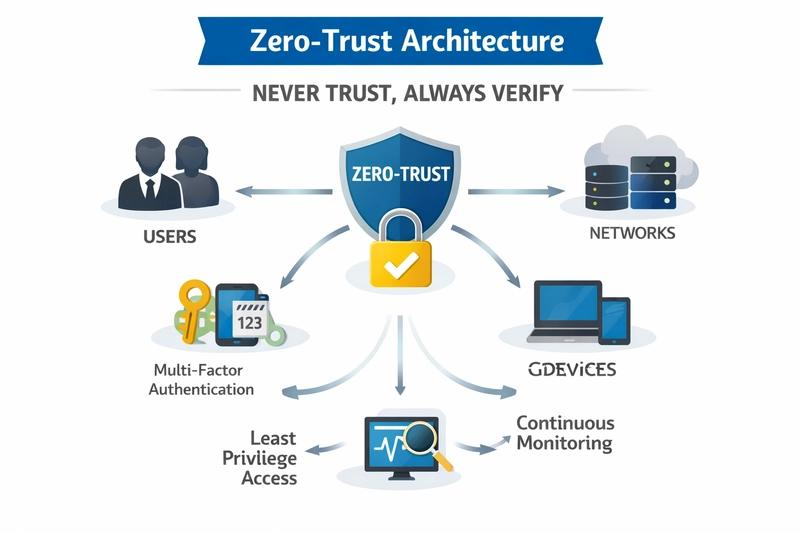
The basic principle of Zero Trust is that access should not automatically be trusted simply because a user or device is inside an organization’s network.
Instead, access should be continuously evaluated based on factors such as:
- User identity
- Device security
- Location
- Application
- Risk level
- Requested resource
- Authentication status
Multi-factor authentication and least-privilege access are important components of this approach.
Zero Trust is particularly relevant as employees work remotely and organizations use cloud applications across multiple locations.
For businesses reviewing Cybersecurity Trends, Zero Trust provides a framework for reducing unnecessary access and limiting the potential impact of compromised accounts.
3. Cloud Security
Cloud computing has become an essential part of modern business infrastructure. Organizations use cloud platforms to store data, run applications, collaborate with employees, and deliver digital services.
However, cloud environments can create security challenges when permissions, configurations, applications, and accounts are not properly managed.
Cloud security is therefore one of the major Cybersecurity Trends in 2026.
Organizations are increasingly focusing on:
- Cloud access management
- Data encryption
- Secure cloud configurations
- Identity management
- Cloud workload protection
- Continuous monitoring
- Backup and recovery
- Misconfiguration detection
Businesses should regularly review cloud permissions and ensure that employees only receive the access necessary for their roles.
4. Identity and Access Management
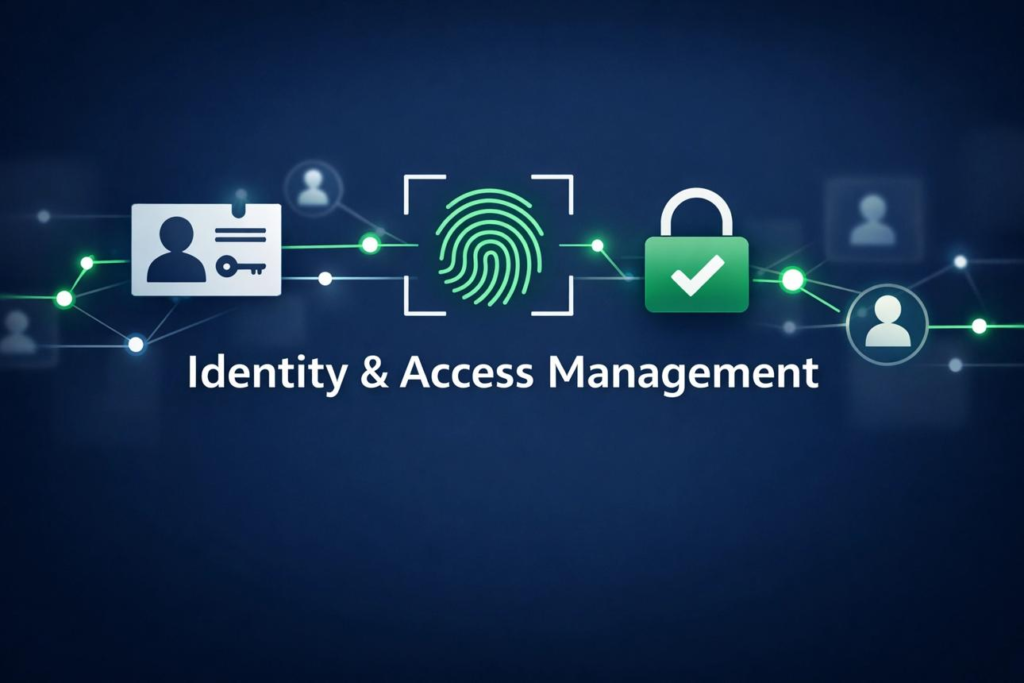
Identity has become a central part of cybersecurity.
A stolen username and password can provide attackers with an entry point into business systems. For this reason, organizations are increasingly focusing on identity security rather than relying solely on traditional network defenses.
Modern identity security includes:
- Multi-factor authentication
- Strong password policies
- Single sign-on
- Privileged access management
- Role-based access
- Identity monitoring
- Automated access reviews
Organizations should also remove inactive accounts and regularly review employee permissions.
As digital systems become more interconnected, identity protection will remain one of the most important Cybersecurity Trends.
5. Passwordless Authentication
Passwordless authentication is another growing development in digital security.
Traditional passwords can be stolen through phishing, credential attacks, malware, and data breaches. Passwordless methods can reduce dependence on passwords by using technologies such as:
- Passkeys
- Biometrics
- Security keys
- Device-based authentication
- Cryptographic credentials
Passwordless authentication can improve both security and user convenience when implemented correctly.
Instead of remembering multiple passwords, users can authenticate using a trusted device or supported authentication method.
As organizations look for ways to reduce credential-related risks, passwordless authentication is becoming increasingly relevant.
6. Ransomware Protection
Ransomware remains an important concern for businesses.
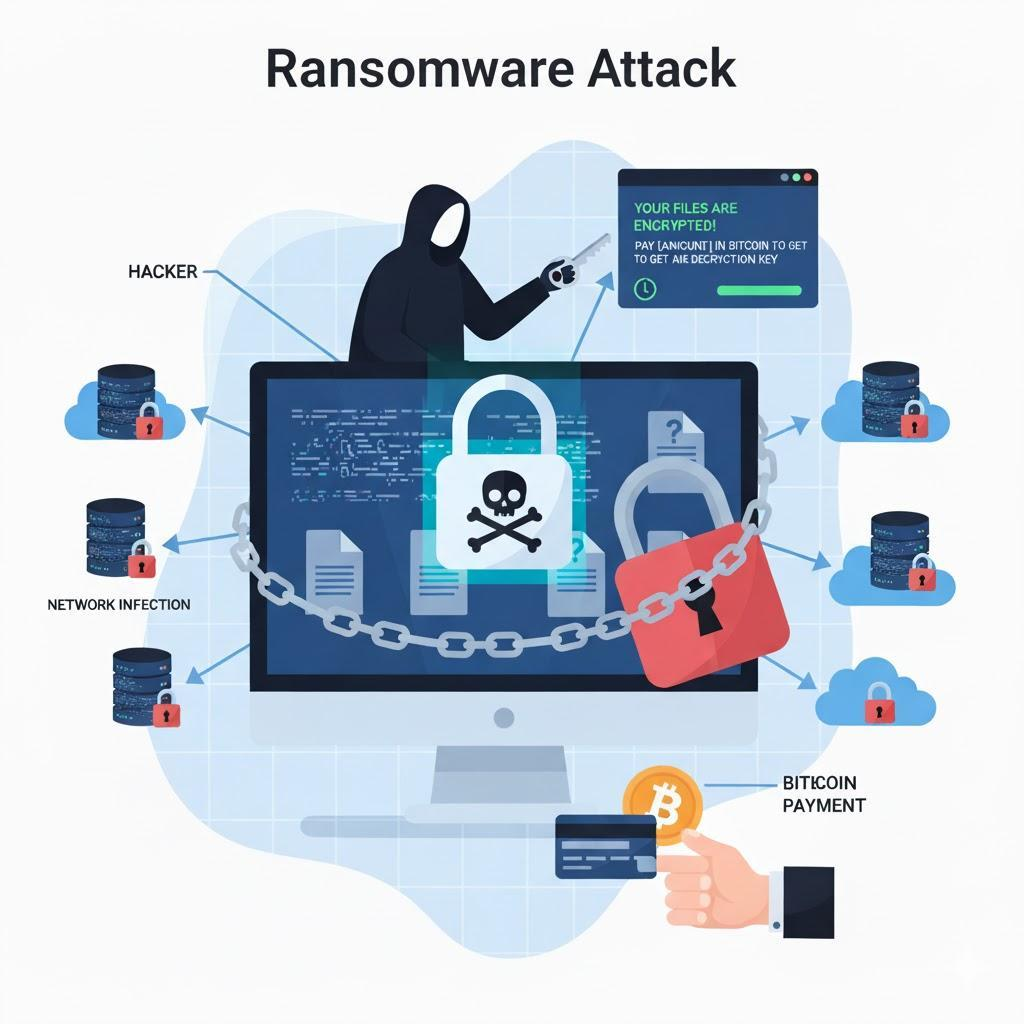
In a ransomware attack, attackers may encrypt or steal organizational data and demand payment. Modern ransomware incidents can affect business operations, customer information, and internal systems.
Organizations are therefore investing in multiple layers of ransomware protection.
Cybersecurity Trends Important measures include:
- Regular backups
- Offline or isolated backups
- Endpoint protection
- Network segmentation
- Multi-factor authentication
- Vulnerability management
- Employee training
- Incident response planning
Backups should also be tested regularly. Simply having a backup does not guarantee that an organization can successfully restore its systems after an incident.
Ransomware protection remains an essential component of modern Cybersecurity Trends and security planning.
7. Security Automation
Security teams often have to process thousands of alerts and events. Manual investigation can consume significant time.
Security automation can help organizations automate repetitive tasks such as:
- Alert classification
- Threat intelligence collection
- Account verification
- Malware analysis
- Security notifications
- Incident-response actions
- Vulnerability scanning
Automation does not necessarily replace cybersecurity professionals. Instead, it can help security teams focus on complex investigations and strategic security decisions Cybersecurity Trends.
In 2026, organizations are increasingly combining automation with human expertise to improve response speed and efficiency.
8. Extended Detection and Response
Extended Detection and Response, commonly known as XDR, focuses on connecting security information across multiple environments.
Instead of monitoring endpoints, networks, identities, email, and cloud systems separately, XDR can help organizations analyze security signals across different areas.
This can provide a broader view of suspicious activity.
For example, an unusual login could be connected with an endpoint alert and suspicious email activity. Viewing these events together can make it easier to identify a potential attack.
XDR is therefore becoming an important technology within modern Cybersecurity Trends.
9. Cybersecurity for IoT Devices
The Internet of Things connects physical devices to digital networks.
Examples include:
- Smart cameras
- Industrial sensors
- Smart appliances
- Connected vehicles
- Medical devices
- Building-management systems
- Smart office equipment
Every connected device can potentially become part of an organization’s attack surface.
Businesses should maintain an inventory of connected devices, change default credentials, apply security updates, segment networks, and monitor unusual device activity.
As the number of connected devices increases, IoT security will remain an important area of cybersecurity.
10. Mobile Security
Smartphones and tablets are now used for communication, authentication, payments, business applications, and remote work.
This makes mobile security increasingly important.
Businesses can strengthen mobile security by using:
- Mobile device management
- Device encryption
- Secure authentication
- Application controls
- Remote device management
- Security updates
- Employee security training
Employees should also avoid installing suspicious applications and connecting to untrusted networks when handling sensitive business information.
Mobile security is becoming increasingly connected with broader Cybersecurity Trends because mobile devices can provide access to important organizational resources.
Benefits of Following Cybersecurity Trends
Understanding Cybersecurity Trends can provide several benefits for businesses.
1. Better Threat Detection
Modern security technologies can help organizations identify suspicious behavior earlier.
AI-based monitoring, behavioral analytics, and automated detection can provide additional visibility into potential threats.
2. Improved Data Protection
Organizations handle customer information, financial records, employee data, intellectual property, and confidential business documents.
Strong cybersecurity practices help protect these resources from unauthorized access.
3. Reduced Business Disruption
Cyberattacks can interrupt operations. Strong prevention, monitoring, backup, and recovery strategies can reduce downtime.
4. Greater Customer Trust
Customers expect businesses to protect their information.
A strong cybersecurity program can support customer confidence and demonstrate that an organization takes data protection seriously.
5. Better Regulatory Readiness
Many industries have privacy and security requirements.
Maintaining appropriate security controls can help organizations prepare for applicable regulatory and contractual obligations.
6. Improved Incident Response
Security incidents can happen even when organizations have strong defenses.
Incident-response planning helps businesses understand what to do when suspicious activity occurs.
Cybersecurity Strategies for Businesses in 2026
Following Cybersecurity Trends is useful, but businesses also need practical strategies.
Conduct Regular Risk Assessments
Cybersecurity Trends Organizations should regularly identify their most important systems, data, applications, and potential vulnerabilities.
A risk assessment can help answer questions such as:
- What information is most valuable?
- Which systems are business-critical?
- Who has access?
- Which vulnerabilities need immediate attention?
- What could happen if a system becomes unavailable?
Use Multi-Factor Authentication
Multi-factor authentication provides an additional security layer beyond passwords.
Organizations should prioritize MFA for important accounts, administrative access, remote access, and cloud services.
Keep Software Updated
Security vulnerabilities can exist in operating systems, applications, plugins, servers, and network devices.
Businesses should establish a structured patch-management process.
Train Employees
Employees are an important part of Cybersecurity Trends
Security awareness programs should cover:
- Phishing
- Password security
- Suspicious attachments
- Social engineering
- Safe browsing
- Device security
- Data handling
- Incident reporting
Regular training can help employees recognize common security risks.
Create an Incident Response Plan
Organizations should not wait until an attack occurs to decide what to do.
An incident-response plan should define:
- Who detects the incident
- Who investigates it
- Who communicates internally
- How systems are isolated
- How evidence is preserved
- How recovery occurs
- How lessons are documented
Testing the plan through simulations can help identify weaknesses.
Cybersecurity Challenges in 2026
Despite advances in technology, organizations face several cybersecurity challenges.
Increasing Attack Complexity
Attackers can combine phishing, stolen credentials, malware, social engineering, and vulnerabilities into coordinated campaigns.
Growing Attack Surface
Cloud applications, remote employees, mobile devices, APIs, IoT devices, and third-party platforms can increase the number of potential entry points.
Shortage of Security Professionals
Many organizations continue to face difficulties finding professionals with specialized cybersecurity skills.
Third-Party Risks
Businesses frequently depend on external vendors and technology providers. A security problem at a third party can potentially affect connected organizations.
Human Error
Employees can accidentally expose information, click malicious links, use weak credentials, or misconfigure systems.
Technology alone cannot eliminate every human-related security risk.
The Role of Employees in Cybersecurity
Cybersecurity is not only the responsibility of an IT department.
Every employee can contribute to organizational security.
Employees should:
- Use strong authentication
- Avoid suspicious links
- Verify unexpected requests
- Protect company devices
- Report suspicious activity
- Avoid unauthorized software
- Follow company security policies
- Handle confidential data carefully
Businesses should create an environment where employees feel comfortable reporting potential security incidents quickly.
Early reporting can give security teams more time to investigate and respond.
Cybersecurity and Artificial Intelligence
The relationship between AI and cybersecurity will become increasingly important.
AI can support security operations by analyzing patterns across large datasets. It can also help security teams identify anomalies and prioritize investigations.
At the same time, attackers may use AI to improve their own capabilities.
This creates an ongoing technology race.
Businesses should therefore approach AI security carefully. They should establish policies governing how AI tools are used, what information can be entered into AI systems, and how AI-generated results are reviewed.
AI security should become part of an organization’s broader cybersecurity strategy rather than being treated as a separate technology project.
Future of Cybersecurity
The future of cybersecurity will likely involve greater automation, stronger identity protection, improved cloud security, and more advanced threat detection.
Several areas are expected to remain important:
AI-Driven Security
AI will continue supporting security monitoring, analysis, and response.
Zero Trust
Organizations will continue moving toward identity-focused security models.
Passwordless Authentication
Passkeys and other passwordless methods may become increasingly common.
Cloud-Native Security
Security tools will increasingly be designed for cloud-based environments.
Automated Response
Organizations will use automation to respond to certain security events more quickly.
Security-by-Design
Security may increasingly be integrated into applications and products from the beginning rather than added later.
These developments demonstrate why tracking Cybersecurity Trends is important for organizations planning their long-term technology strategies.
How Small Businesses Can Improve Cybersecurity
Cybersecurity is not only for large corporations.
Small businesses can take several practical steps without building a large security department.
Start with the basics:
- Enable multi-factor authentication.
- Keep software updated.
- Back up important data.
- Use reputable security software.
- Restrict administrative access.
- Train employees.
- Monitor important accounts.
- Create an incident-response plan.
- Review third-party services.
- Remove inactive user accounts.
Small improvements can significantly strengthen an organization’s overall security posture.
Cybersecurity Trends and Business Growth
Cybersecurity can also support business growth.
When businesses introduce new digital services, they need to consider security from the beginning. Customers are more likely to engage with organizations that demonstrate responsible handling of information.
Cybersecurity can also reduce the financial and operational consequences associated with security incidents.
For growing companies, security should therefore be viewed as part of digital infrastructure.
A business that adopts new technologies without considering security may create vulnerabilities that become more difficult and expensive to fix later.
Cybersecurity Checklist for 2026
Businesses can use the following checklist when reviewing their security strategy:
- Enable multi-factor authentication
- Review user permissions
- Remove inactive accounts
- Update software regularly
- Maintain secure backups
- Test backup recovery
- Train employees
- Monitor important systems
- Protect cloud environments
- Secure mobile devices
- Review third-party vendors
- Conduct vulnerability assessments
- Create an incident-response plan
- Test the response plan
- Review security policies regularly
- Monitor emerging Cybersecurity Trends
Emerging Cybersecurity Trends Businesses Should Watch - As technology continues to develop, businesses need to look beyond current security practices and prepare for emerging risks. The next generation of Cybersecurity Trends will focus on making security more proactive, intelligent, automated, and integrated into everyday business operations.
- 1. Security-by-Design
- Security-by-design means considering cybersecurity from the beginning of a product, application, or technology project. Instead of developing a product first and adding security later, organizations can identify potential vulnerabilities during the planning and development stages.
- This approach can help reduce security weaknesses and make applications more resilient. Development teams can include security testing, secure coding practices, access controls, and vulnerability assessments throughout the development lifecycle.
- 2. Privacy-Enhancing Technologies
- Data privacy is becoming increasingly important as organizations collect and process large amounts of personal and business information.
- Privacy-enhancing technologies can help organizations use data while reducing unnecessary exposure of sensitive information. Techniques may include encryption, anonymization, tokenization, and controlled access.
- Businesses should also establish clear data-retention policies and avoid collecting information that is not necessary for their operations.
- 3. API Security
- Application Programming Interfaces, commonly called APIs, allow different software systems to communicate with one another. APIs are essential for websites, mobile applications, cloud services, payment systems, and business platforms.
- However, poorly protected APIs can create security vulnerabilities.
- Organizations should use authentication, authorization, encryption, rate limiting, monitoring, and regular security testing to protect APIs. As businesses continue connecting more applications and services, API security will remain an important part of Cybersecurity Trends.
- 4. Continuous Security Monitoring
- Traditional security approaches often rely on periodic assessments. Modern organizations increasingly need continuous monitoring because threats can occur at any time.
- Continuous monitoring can help security teams identify unusual login activity, unexpected network traffic, suspicious applications, and other potential indicators of compromise.
- Security teams can combine monitoring with automated alerts to respond more quickly to potential incidents.
- 5. Cybersecurity Culture
- Technology is only one part of cybersecurity. Organizations also need a strong security culture.
- A cybersecurity culture encourages employees, managers, developers, and executives to consider security when making everyday decisions. Regular training, clear policies, simulated phishing exercises, and simple reporting procedures can help employees become an active part of the security process.
- Ultimately, the most effective Cybersecurity Trends strategy combines advanced technology with responsible human behavior. As businesses continue adopting AI, cloud platforms, connected devices, and digital services, cybersecurity will remain an essential foundation for sustainable digital growth.
Conclusion
The cybersecurity environment in 2026 is being shaped by artificial intelligence, cloud computing, remote work, connected devices, digital identities, automation, and increasingly sophisticated cyber threats.
The most important Cybersecurity Trends include AI-powered security, Zero Trust, cloud protection, identity management, passwordless authentication, ransomware protection, security automation, XDR, IoT security, and mobile security.
However, adopting new technology alone is not enough. Businesses need a balanced strategy that combines technology, employee awareness, strong policies, continuous monitoring, and effective incident response.
Organizations that regularly review emerging Cybersecurity Trends can better understand changes in the threat landscape and make informed decisions about their security priorities.
The future of cybersecurity will require continuous adaptation. As technology develops, security strategies will also need to evolve. Businesses that treat cybersecurity as an ongoing process rather than a one-time project can build stronger foundations for secure digital growth in the years ahead.