
Ultimate Benefits of Saving Money Early for Financial Freedom In 2026. Saving money is one of the most important financial habits a person can develop. Whether you are a student, a young professional, a business owner, or someone planning for retirement, starting early can make a significant difference in your financial future. In 2026, with changing economic conditions, rising living costs, and increasing financial responsibilities, developing a strong saving habit has become more important than ever.
The Benefits of Saving Money Early for Financial Freedom go far beyond simply having money in a bank account. Early saving can help you build financial security, handle emergencies, reduce financial stress, achieve personal goals, and create opportunities for the future. When you begin saving at an early age, you give your money more time to grow and give yourself more time to make better financial decisions.
This article explores the major Benefits of Saving Money Early for Financial Freedom and explains how consistent saving can help you create a more stable and independent financial life in 2026.
What Does Financial Freedom Mean?
Financial freedom generally means having enough financial stability and resources to manage your needs and make important life decisions without constantly worrying about money.
Financial freedom does not necessarily mean becoming extremely wealthy. Instead, it can mean having control over your finances, maintaining an emergency fund, reducing unnecessary debt, saving for important goals, and investing according to your circumstances.
One of the biggest Benefits of Saving Money Early for Financial Freedom is that it allows you to gradually build this financial independence rather than trying to achieve everything at once.
When you start early, even small amounts can become meaningful over time. The key is not always the amount you save but the consistency with which you save.
1. Builds a Strong Financial Foundation
The first major Benefit of Saving Money Early for Financial Freedom is the creation of a strong financial foundation.
Saving regularly teaches you to prioritize your future needs instead of spending all your income immediately. This habit can influence many other financial decisions, including budgeting, investing, borrowing, and spending.
For example, someone who saves a portion of every paycheck may become more comfortable with creating a monthly budget. Over time, budgeting can make it easier to identify unnecessary expenses and redirect that money toward meaningful goals.
A strong financial foundation does not appear overnight. It develops through repeated habits.
The earlier you develop these habits, the more time you have to improve them.
2. Creates an Emergency Fund
Unexpected expenses can occur at any time. Medical bills, vehicle repairs, job changes, family emergencies, or urgent household expenses can put pressure on your finances.
An emergency fund provides money specifically for unexpected situations.
Building an emergency fund is another important Benefit of Saving Money Early for Financial Freedom because it can reduce the need to rely on credit cards or high-cost borrowing when something unexpected happens.
The amount required for an emergency fund depends on your income, expenses, responsibilities, and personal circumstances. A useful approach is to gradually build your emergency savings rather than waiting until you can save a large amount at once.
Even small regular contributions can move you closer to having a financial safety net.
3. Reduces Financial Stress
Money problems can create significant stress. Constantly worrying about bills, debt payments, emergencies, and unexpected expenses can make everyday life more difficult.
One of the important Benefits of Saving Money Early for Financial Freedom is the sense of preparedness that comes from having money set aside.
When you know that you have some savings available, an unexpected expense may feel more manageable. You may still need to adjust your budget, but you are less dependent on finding money immediately.
Financial preparation cannot eliminate every money-related problem. However, saving can provide an additional layer of security and control.
4. Takes Advantage of Time
Time is one of the most valuable resources in personal finance.
The Benefits of Saving Money Early for Financial Freedom become especially noticeable when savings are invested and allowed to potentially grow over long periods.
Compounding occurs when returns generate additional returns over time. The longer money remains invested, the more opportunities it may have to compound, although investment returns are never guaranteed.
For example, a person who begins investing at 25 generally has more time for potential growth than someone who starts at 45, assuming similar investment conditions.
This does not mean that someone who starts later cannot build wealth. It simply demonstrates why starting early can provide an important time advantage.
5. Helps You Avoid Unnecessary Debt
Debt can be useful in certain situations, but high-cost debt can make achieving financial goals more difficult.
Saving money before major expenses can reduce the need to borrow for every unexpected purchase.
Avoiding unnecessary debt is another significant Benefit of Saving Money Early for Financial Freedom.
Suppose you need to replace an important household appliance. If you already have savings available, you may be able to pay for some or all of the expense without taking on additional debt.
However, responsible borrowing may still be appropriate for certain major purchases. The goal is not necessarily to avoid every form of debt but to understand the cost and purpose of borrowing.
6. Makes Major Goals More Achievable
Most people have financial goals.
These may include buying a home, starting a business, paying for education, traveling, purchasing a vehicle, or preparing for retirement.
The Benefits of Saving Money Early for Financial Freedom include having more time to work toward these goals.
Instead of trying to collect a large amount of money shortly before a major purchase, you can divide the target into smaller monthly or yearly contributions.
For example, if you want to save for a goal that costs $12,000 over three years, you can create a structured savings plan instead of waiting until the final year.
Breaking large goals into smaller steps can make them feel more achievable.
7. Encourages Better Spending Habits

Saving does not mean avoiding all spending. It means becoming more intentional about how you use your money.
One of the Benefits of Saving Money Early for Financial Freedom is that it encourages you to distinguish between wants and needs.
Before making a purchase, you may begin asking questions such as:
- Do I actually need this?
- Does this purchase support one of my goals?
- Can I find a less expensive alternative?
- Will buying this affect my savings target?
- Am I purchasing it because I need it or because it is convenient?
These questions can help create more thoughtful spending habits.
8. Provides More Career Flexibility
Another important Benefit of Saving Money Early for Financial Freedom is increased flexibility when making career decisions.
Having savings may provide a financial cushion if you want to change jobs, learn a new skill, relocate, start a business, or take time to search for a better opportunity.
Without savings, people may feel pressured to accept the first available option because they need immediate income.
Savings do not guarantee career flexibility, but they can provide additional financial breathing room.
9. Helps Prepare for Retirement

Retirement planning is one of the clearest examples of why starting early matters.
The Benefits of Saving Money Early for Financial Freedom become particularly important when preparing for long-term financial needs.
Retirement may be decades away, but starting early allows you to spread contributions across a longer period.
Depending on your country, employment situation, and financial circumstances, retirement savings may include employer-sponsored plans, individual retirement accounts, pensions, or other investment vehicles.
Understanding the options available to you and contributing consistently can help you prepare for the future.
10. Gives Your Money More Time to Grow
Saving and investing are not identical. Savings are generally designed for accessibility and stability, while investments are intended for potential long-term growth and involve risk.
Nevertheless, the Benefits of Saving Money Early for Financial Freedom can extend into investing when appropriate.
Starting early gives you more time to learn about investing, understand risk, diversify appropriately, and develop long-term habits.
You do not necessarily need to start with a large amount. Learning the fundamentals and contributing consistently can be more practical than waiting until you have a substantial amount of money.
11. Helps You Handle Inflation
Inflation can reduce the purchasing power of money over time.
For example, the amount of money required to purchase a particular product or service today may not be enough to purchase the same thing many years from now.
This makes long-term financial planning important.
One of the Benefits of Saving Money Early for Financial Freedom is having time to consider how inflation may affect your future financial needs.
For long-term goals, some people consider investments that have historically provided opportunities for growth above inflation, although such investments involve risk and do not guarantee returns.
The appropriate strategy depends on your goals, timeline, and risk tolerance.
12. Improves Financial Discipline
Financial discipline is developed through repeated behavior.
When you regularly save money, you create a routine that can become part of your lifestyle.
The Benefits of Saving Money Early for Financial Freedom therefore include not only the money you accumulate but also the financial discipline you develop along the way.
Automatic transfers can make saving easier. For example, you could arrange for a fixed amount to move into a separate savings account shortly after receiving your income.
This approach reduces the temptation to spend the money first and save whatever remains.
13. Helps You Prepare for Life Changes
Life can change unexpectedly.
You may get married, have children, move to another city, change careers, start a company, or take responsibility for family members.
The Benefits of Saving Money Early for Financial Freedom include being better prepared for these changes.
Savings can give you additional resources when your financial responsibilities increase.
Planning for future life changes does not require knowing exactly what will happen. Benefits of Saving Money Early for Financial Freedom Instead, it involves building enough financial flexibility to respond when circumstances change.
14. Gives You Greater Control Over Your Choices
Money can influence many personal decisions.
Having savings can provide greater control over how you respond to opportunities and challenges.
This is another meaningful Benefit of Saving Money Early for Financial Freedom.
For example, someone with savings may have more time to search for suitable employment after leaving a job. Another person may use savings to pay for professional education or launch a small business.
Financial independence is not about having unlimited money. It is about having enough resources to make decisions with greater flexibility.
15. Encourages Goal-Based Financial Planning
Saving becomes easier when you know why you are saving.
Instead of simply saying, “I need to save more,” create specific goals.
You could have separate goals for:
- Emergency expenses
- Education
- Travel
- Home ownership
- Business
- Retirement
- Family needs
- Major purchases
Goal-based planning makes the Benefits of Saving Money Early for Financial Freedom more practical because every contribution has a purpose.
You can also track your progress and make adjustments when your income or expenses change.
How to Start Saving Money Early
Understanding the Benefits of Saving Money Early for Financial Freedom is useful, but taking action is what turns the concept into a habit.
Start by examining your current income and expenses.
Write down your essential expenses, discretionary spending, debt payments, and existing savings. This gives you a clearer picture of where your money goes each month.
Next, establish a realistic savings target.
Do not choose an amount that makes your regular budget impossible to maintain. A sustainable savings habit is generally more useful than an unrealistic target that you abandon after a few weeks.
You can increase your savings gradually as your income grows.
Create a Simple Monthly Budget
A budget helps you decide where your money should go before you spend it.
You can divide your income into categories such as essential expenses, savings, debt repayment, investments, and discretionary spending.
The exact percentages will depend on your circumstances.
A budget should be flexible enough to accommodate real-life expenses while still keeping your financial goals visible.
Tracking your spending can also reveal small expenses that become significant over time.
Automate Your Savings
Automation can make saving easier.
Instead of manually transferring money every month, you can set up an automatic transfer from your primary account to your savings account when supported by your bank.
Automation is useful because it turns saving into a routine.
This is one practical way to experience the Benefits of Saving Money Early for Financial Freedom without relying entirely on willpower.
Once the transfer is established, you may begin adjusting your lifestyle around the money that remains available.
Reduce Unnecessary Expenses
Reducing expenses does not mean eliminating everything enjoyable.
Instead, look for expenses that provide little value compared with their cost.
For example, you might discover unused subscriptions, frequent impulse purchases, expensive convenience spending, or services you rarely use.
Redirecting even a portion of these expenses toward savings can support your long-term goals.
The purpose is to create a balance between enjoying the present and preparing for the future.
Increase Your Income When Possible
Saving is only one side of financial planning.
Increasing income can also improve your ability to save.
Depending on your circumstances, this could involve developing new skills, pursuing professional opportunities, taking freelance work, starting a small business, or negotiating compensation.
When your income increases, consider directing at least part of the additional money toward your financial goals instead of immediately increasing your lifestyle expenses.
This can strengthen the Benefits of Saving Money Early for Financial Freedom over time.
Avoid Lifestyle Inflation
Lifestyle inflation happens when spending increases as income increases.
For example, someone may receive a salary increase and immediately upgrade their car, home, entertainment, and other expenses.Benefits of Saving Money Early for Financial Freedom
There is nothing inherently wrong with improving your lifestyle. However, if every income increase is consumed by higher expenses, your savings may not grow significantly.
Keeping some lifestyle expenses stable while increasing savings can help you make better use of additional income.
Learn the Difference Between Saving and Investing
Saving and investing serve different purposes.
Savings are generally appropriate for short-term needs and emergency funds because accessibility and stability are often important.
Investing may be more suitable for certain long-term goals because investments can provide opportunities for growth but also carry the possibility of losing money.
Understanding this distinction is an important part of the Benefits of Saving Money Early for Financial Freedom.
Before investing, learn about fees, diversification, risk, taxes, and your investment time horizon.
Common Mistakes to Avoid
Although saving early has many potential advantages, there are mistakes that can reduce the effectiveness of your financial plan.
One common mistake is waiting for the “perfect” time to start.
Another is setting an unrealistic savings target.
Some people also focus heavily on saving while ignoring expensive debt,, family responsibilities, location, education, debt, health expenses, career opportunities, and financial while others invest money that they may need for immediate expenses.
It is important to consider your overall financial situation rather than following a single strategy.
Do Not Compare Your Financial Journey
Everyone has different circumstances.
Income, family responsibilities, location, education, debt, health expenses, career opportunities, and financial goals can vary considerably.
Therefore, your savings plan should be based on your own situation.
The Benefits of Saving Money Early for Financial Freedom are not about competing with friends, relatives, or people on social media.
Focus, banking, automated saving, and investing information more accessible. At the same time, consumers face changing prices, evolving emergency savings, preparing for retirement, reducing dependence on debt, managing unexpected expenses, and creating invested appropriately. More importantly, it gives you more time to learn, adjust, and improve your financial strategy valuable step toward long-term financial stability. Whether your goal is an emergency fund, education stay consistent, review your progress, and increase your savings when your circumstances allow. Over time, these simple actions can help create a stronger on building a financial system that works for you.
Why 2026 Is a Good Time to Build Better Money Habits
In 2026, financial planning continues to be an important part of personal decision-making.
Technology has made budgeting, banking, automated saving, and investing information more accessible. At the same time, consumers face changing prices, evolving employment conditions, and an increasingly complex financial environment.
These circumstances make financial education particularly valuable.
Learning how to manage money today can help you make more informed decisions tomorrow.
The Benefits of Saving Money Early for Financial Freedom become more meaningful when saving is combined with financial education and thoughtful planning.
A Simple Saving Strategy for Beginners
If you are just beginning, keep your strategy simple.
First, understand your monthly income.
Second, calculate your essential expenses.
Third, identify unnecessary expenses.
Fourth, establish an emergency savings goal.
Fifth, automate a realistic amount into savings.
Sixth, reduce high-cost debt where appropriate.
Seventh, learn about long-term investing.
Finally, review your financial plan regularly.
This process does not need to be complicated.
Consistency is often more important than complexity.
The Long-Term Impact of Small Savings
Many people underestimate the value of small contributions.
Saving a modest amount every month may not feel impressive in the beginning. However, consistent saving over many years can result in a significant accumulation of money.
This illustrates another important Benefit of Saving Money Early for Financial Freedom.
For example, saving $100 every month means contributing $1,200 over one year before considering any interest or investment growth.
Over several years, those contributions can become substantial.
The exact result will depend on interest, investment returns, fees, taxes, and other factors.
Financial Freedom Is a Process
Financial freedom is not usually achieved through one major decision.
It is a process involving many small decisions.
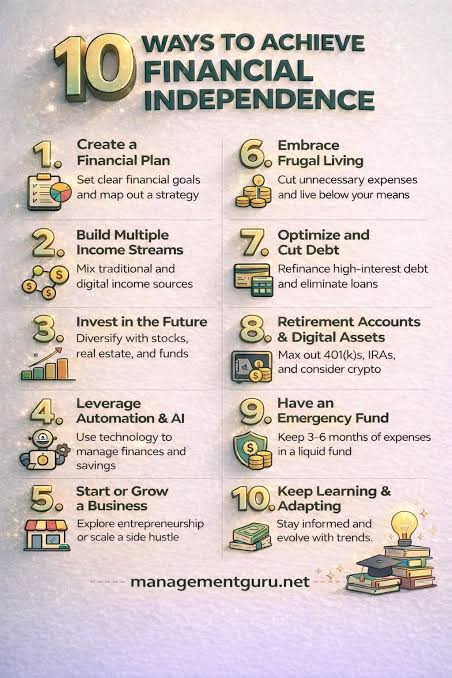
Saving regularly, controlling unnecessary spending, managing debt, building emergency reserves, learning about investments, and planning for retirement can all contribute to stronger financial habits.
The Benefits of Saving Money Early for Financial Freedom become clearer when these individual actions work together.
The goal is not perfection.
The goal is progress.
Final Thoughts
Starting early can transform the way you approach money.
The Benefits of Saving Money Early for Financial Freedom include developing better financial habits, building emergency savings, preparing for retirement, reducing dependence on debt, managing unexpected expenses, and creating greater flexibility for future decisions.
Saving early also gives your money more time to potentially benefit from compounding when invested appropriately. More importantly, it gives you more time to learn, adjust, and improve your financial strategy.
The Benefits of Saving Money Early for Financial Freedom are therefore not limited to the amount sitting in your savings account. They can also include greater financial awareness, discipline, preparedness, and confidence in managing future responsibilities.
You do not need to become wealthy overnight.
You do not need to save huge amounts immediately.
You simply need to begin with an amount that fits your circumstances and develop a consistent habit.
The Benefits of Saving Money Early for Financial Freedom become stronger when saving becomes a regular part of your lifestyle rather than a temporary challenge.
In 2026, developing this habit can be a valuable step toward long-term financial stability. Whether your goal is an emergency fund, education, a home, a business, or retirement, starting early can give you more time to work toward it.
Ultimately, the Benefits of Saving Money Early for Financial Freedom come from giving your future self more choices. Every responsible financial decision you make today can become part of a larger plan for tomorrow.
Start small, stay consistent, review your progress, and increase your savings when your circumstances allow. Over time, these simple actions can help create a stronger and more organized financial future.