
Time is one of the most valuable resources we have, yet managing it effectively has become increasingly difficult. In 2026, people are dealing with constant notifications, remote and hybrid work, artificial intelligence tools, social media, online meetings, personal responsibilities, and an endless stream of information. Learning how to use your available hours wisely can make a significant difference in your productivity, focus, and overall quality of life.
The good news is that effective time management does not require working every minute of the day. Instead, it requires understanding your priorities, creating realistic systems, eliminating unnecessary distractions, and making intentional decisions about where your time goes. This guide explores Proven Tips for Better Time Management 2026 that students, professionals, entrepreneurs, freelancers, and anyone with a busy schedule can apply.
Whether you want to complete more work, reduce stress, spend more time with your family, or simply feel more organized, these Proven Tips for Better Time Management 2026 can help you create a practical routine that works for your lifestyle.
Why Time Management Matters 2026
The modern workplace and personal environment are changing rapidly. Technology has made communication faster, but it has also created new sources of distraction. A person can receive emails, messages, notifications, calendar invitations, social media updates, and work requests within the same hour.
This makes intentional planning more important than ever.
One of the most useful Proven Tips for Better Time Management 2026 is to stop thinking about productivity as simply doing more. True productivity means spending your time on activities that contribute meaningfully to your goals.
For example, answering 100 unnecessary messages may make you feel busy, but it may not move your most important project forward. Similarly, spending hours organizing your task list can become another form of procrastination if you never start the actual work.
Good time management helps you distinguish between being busy and being productive.
It can also help you:
- Complete important tasks on time.
- Reduce unnecessary stress.
- Create better work-life balance.
- Improve concentration.
- Avoid last-minute deadlines.
- Make time for exercise and hobbies.
- Spend more meaningful time with family.
- Make progress toward long-term goals.
The following Proven Tips for Better Time Management 2026 focus on practical habits rather than complicated productivity systems.
1. Set Clear Priorities Every Morning
One of the simplest Proven Tips for Better Time Management 2026 is to begin each day by identifying your most important priorities.
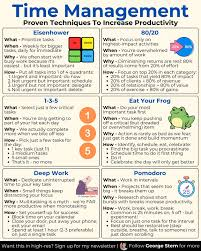
Many people start their mornings by checking emails or scrolling through social media. This allows other people’s demands to determine how they spend their first productive hours.
Instead, take five to ten minutes to decide what really matters that day.
Ask yourself three questions:
- What must be completed today?
- What task will create the greatest impact?
- What can wait until tomorrow?
Try to identify between one and three major priorities. You can have a longer task list, but your key priorities should remain limited.
For example, if you are a student, your priorities might include completing an assignment, studying for an upcoming examination, and attending an important class. If you are a professional, your priorities might involve completing a presentation, attending an essential meeting, and finishing an important client project.
A short priority list makes decision-making easier because you know what deserves your attention.
Another important part of this strategy is distinguishing between urgent tasks and important tasks. Something may appear urgent because someone wants an immediate response, but that does not necessarily mean it is important to your long-term goals.
By starting your day with clear priorities, you give your day direction instead of allowing distractions to control it.
2. Use Time Blocking for Important Work
Another highly practical approach among Proven Tips for Better Time Management 2026 is time blocking.
Time blocking means assigning specific periods of your day to particular activities. Instead of simply writing “work on project” on your to-do list, you might schedule that activity from 9:00 to 10:30 a.m.
For example:
- 8:00–8:30 — Plan the day.
- 8:30–10:00 — Deep work.
- 10:00–10:20 — Break.
- 10:20–11:30 — Project work.
- 11:30–12:00 — Emails.
- 1:00–2:00 — Meetings.
- 2:00–3:30 — Focused work.
- 4:00–4:30 — Review and planning.
The purpose is not to create a rigid schedule that cannot change. Instead, it gives your day a structure.
One of the important Proven Tips for Better Time Management 2026 is to leave some space between activities. Unexpected calls, technical problems, questions, and urgent responsibilities can appear at any time. If every minute is scheduled, one small interruption can destroy your entire plan.
Therefore, consider leaving approximately 10–20 percent of your working day unscheduled.
Time blocking is particularly useful for people who frequently switch between tasks. When you already know what you should be doing during a particular period, it becomes easier to resist distractions.
3. Apply the Two-Minute Rule
The two-minute rule is another simple strategy included in Proven Tips for Better Time Management 2026.
The basic idea is straightforward: if a small task can genuinely be completed in about two minutes, consider doing it immediately rather than adding it to your task list.
Examples include:
- Replying to a very short message.
- Filing a document.
- Putting an item away.
- Confirming a simple appointment.
- Adding information to a calendar.
- Sending a quick confirmation.
However, the rule should not be used to interrupt deep work constantly. If you are working on an important project, immediately responding to every tiny request can create unnecessary task switching.
Use the two-minute rule mainly when you are organizing your workspace, processing administrative tasks, or clearing a small backlog.
The larger lesson behind this strategy is to prevent tiny tasks from accumulating into mental clutter.
When dozens of small unfinished tasks are constantly occupying your attention, they can make your workload feel larger than it really is.
Using this technique appropriately is one of the practical Proven Tips for Better Time Management 2026 because it helps keep minor responsibilities under control.
4. Eliminate Digital Distractions
Digital distraction is one of the biggest challenges facing modern workers and students. Therefore, eliminating unnecessary interruptions is central to Proven Tips for Better Time Management 2026.
Your phone may be useful, but it can also become a major source of lost time.
A notification that takes ten seconds to check can turn into ten minutes of scrolling. Repeating this several times throughout the day can consume a surprising amount of productive time.
Try these strategies:
- Turn off non-essential notifications.
- Keep your phone away during deep work.
- Use website blockers when necessary.
- Close unnecessary browser tabs.
- Check email at predetermined times.
- Remove distracting apps from your home screen.
- Use “Do Not Disturb” during focused work.
You do not necessarily need to eliminate social media completely. The goal is to control when and how you use it.
For example, instead of checking social media whenever you feel bored, allocate a specific period for it.
This approach changes technology from something that controls your attention into something you use intentionally.
Reducing distractions is among the most effective Proven Tips for Better Time Management 2026 because concentration has become increasingly valuable in a highly connected environment.
5. Learn to Say No
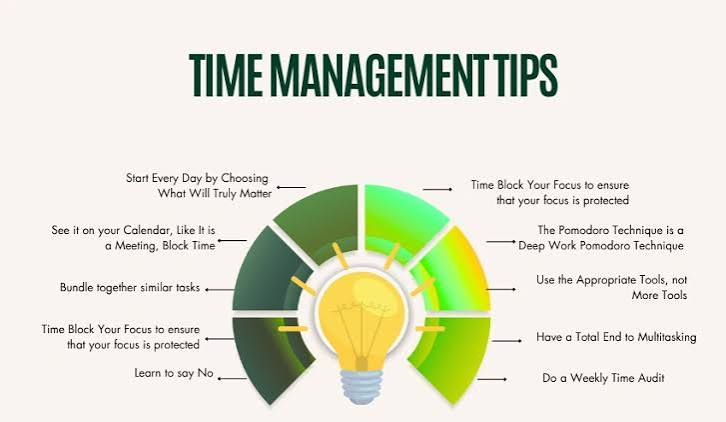
Many people struggle with time management because they accept too many commitments.
Learning to say no is therefore one of the most important Proven Tips for Better Time Management 2026.
Every commitment consumes some combination of time, energy, attention, or emotional resources. If you accept every request, meeting, project, invitation, and responsibility, eventually your schedule becomes overloaded.
Before accepting a new commitment, ask:
- Is this necessary?
- Does it support my current goals?
- Do I have enough time for it?
- What will I have to postpone?
- Is there someone else who can handle it?
Saying no does not have to be rude.
You can politely explain that your current workload does not allow you to take on another responsibility.
Setting boundaries allows you to protect time for activities that actually matter.
One of the deeper Proven Tips for Better Time Management 2026 is recognizing that good time management is not only about organizing your existing responsibilities. It is also about deciding which responsibilities should not be accepted in the first place.
6. Use Technology as a Productivity Assistant
Technology can either waste your time or help you manage it. Learning to use digital tools intentionally is therefore another useful element of Proven Tips for Better Time Management 2026.
Calendar applications can help you schedule appointments and time blocks. Task-management applications can help you organize responsibilities. Note-taking applications can capture ideas before they become distractions.
Artificial intelligence tools can also help with certain repetitive tasks, such as summarizing information, brainstorming ideas, organizing notes, or creating initial drafts.
However, technology should support your thinking rather than replace it.
Too many productivity applications can actually make your system more complicated. You do not need ten different apps to manage your schedule.
A simple setup might include:
- One calendar.
- One task list.
- One notes application.
- One method for tracking important projects.
The goal is simplicity.
Review your tools regularly and remove applications that create unnecessary complexity.
Using technology intentionally is among the Proven Tips for Better Time Management 2026 because modern productivity increasingly depends on managing digital information effectively.
7. Prioritize Deep Work
Deep work means dedicating uninterrupted attention to cognitively demanding activities.
This can include writing, programming, studying, designing, researching, strategic planning, or solving complex problems.
Making space for deep work is one of the most valuable Proven Tips for Better Time Management 2026.
Many people spend their entire day responding to messages and attending meetings. At the end of the day, they may have completed many small tasks but made little progress on their most important project.
Try scheduling at least one uninterrupted focus session each day.
Start with 30–60 minutes if longer sessions feel difficult.
During this period:
- Turn off unnecessary notifications.
- Close irrelevant applications.
- Put your phone away.
- Work on only one major task.
- Avoid checking email.
- Take a short break afterward.
Over time, you can increase the length of your focused sessions.
The objective is not necessarily to work longer. It is to make your existing work hours more productive.
This is why deep work remains central to Proven Tips for Better Time Management 2026.
8. Avoid Multitasking
Multitasking often feels productive, but switching repeatedly between activities can make it harder to maintain concentration.
For that reason, avoiding unnecessary multitasking is another important part of Proven Tips for Better Time Management 2026.
Instead of constantly switching between unrelated activities, group similar tasks together.
For example, you might:
- Answer emails during one dedicated period.
- Make phone calls together.
- Complete administrative tasks together.
- Schedule meetings in specific blocks.
- Reserve separate periods for creative work.
This technique is often called task batching.
Task batching reduces the mental cost of switching between unrelated activities.
If you need to write an article, for example, avoid checking messages every five minutes. Finish a meaningful section first, then process your communications.
Focused work generally becomes easier when your brain does not have to repeatedly change contexts.
Therefore, reducing unnecessary multitasking is one of the practical Proven Tips for Better Time Management 2026.
9. Take Regular Breaks
Effective time management does not mean working continuously.
Taking appropriate breaks is another essential element of Proven Tips for Better Time Management 2026 because sustained concentration can become difficult when you never give yourself an opportunity to recover.
A break does not necessarily mean scrolling through social media.
Better options may include:
- Walking for a few minutes.
- Drinking water.
- Stretching.
- Looking away from the screen.
- Practicing simple breathing exercises.
- Having a short conversation.
- Resting quietly.
You can experiment with different work-and-break patterns.
For example, some people prefer working for 25 minutes followed by a five-minute break. Others prefer longer sessions of 50–90 minutes followed by a longer break.
The right approach depends on your work, energy level, and personal preferences.
The important point is to recognize that rest can support productivity rather than automatically being the enemy of it.
Including intentional recovery periods is therefore one of the Proven Tips for Better Time Management 2026 that can help you maintain consistent performance.
10. Review Your Day and Improve Your System
The final strategy among these Proven Tips for Better Time Management 2026 is to review your schedule regularly.
Time management is not a one-time activity. Your responsibilities, goals, working environment, and personal circumstances can change.
At the end of each day, spend five minutes reviewing what happened.
Ask yourself:
- What did I accomplish?
- What took longer than expected?
- What distracted me?
- What should I have avoided?
- What is the most important task tomorrow?
Do not use the review to criticize yourself.
Use it to identify patterns.
For example, you may discover that:
- You underestimate how long meetings take.
- You regularly check your phone during focused work.
- You schedule too many tasks each day.
- You work better during certain hours.
- You become less productive after several consecutive meetings.
Once you identify these patterns, adjust your schedule.
Weekly reviews can also be useful. Look at your major goals and determine whether your daily activities are actually supporting them.
This continuous improvement approach makes these Proven Tips for Better Time Management 2026 more sustainable because you are building a system that evolves with your needs.
Time Management for Students
Students can benefit significantly from Proven Tips for Better Time Management 2026.
Academic life often involves classes, assignments, examinations, projects, extracurricular activities, and personal responsibilities.
Students can start by creating a weekly academic calendar.
Record:
- Class schedules.
- Assignment deadlines.
- Examination dates.
- Study sessions.
- Project milestones.
- Personal commitments.
Then break large assignments into smaller tasks.
Instead of writing “complete research project,” create individual steps such as:
- Choose the topic.
- Research sources.
- Create an outline.
- Write the first draft.
- Edit the draft.
- Prepare the final submission.
Breaking large responsibilities into smaller actions makes them easier to start.
Students should also avoid leaving major assignments until the last day.
Using these Proven Tips for Better Time Management 2026 consistently can make academic workloads more predictable and manageable.
Time Management for Professionals
Professionals can also apply Proven Tips for Better Time Management 2026 to improve their working routines.
Start by separating high-value work from routine administration.
For example, strategic planning and creative work may require uninterrupted concentration, while email processing may require less mental energy.
Try scheduling demanding tasks during your strongest working hours.
You can also reduce unnecessary meetings.
Before accepting a meeting, consider whether the objective could be achieved through a short message or shared document.
When meetings are necessary, having a clear agenda can help prevent them from consuming more time than necessary.
Professionals should also communicate realistic deadlines.
Agreeing to every request immediately may create an overloaded schedule later.
Good time management therefore involves communication as much as personal organization.
Time Management and Work-Life Balance
Another reason the Proven Tips for Better Time Management 2026 matter is that time management should not focus exclusively on work.
A productive life also includes relationships, health, hobbies, rest, and personal interests.
If your entire schedule is dedicated to work, you may accomplish many professional tasks while sacrificing other important areas of life.
Consider scheduling personal activities just as you would schedule professional responsibilities.
This might include:
- Exercise.
- Family time.
- Hobbies.
- Reading.
- Social activities.
- Rest.
- Personal learning.
A calendar can become more than a work-management tool. It can become a way to protect the activities that make your life meaningful.
The goal of Proven Tips for Better Time Management 2026 is ultimately not to maximize the number of tasks you complete. It is to help you use your limited time according to your priorities.
How to Make These Habits Last
Learning Proven Tips for Better Time Management 2026 is only the beginning.
The real challenge is consistency.
Do not try to completely redesign your life overnight.
Instead, choose one or two strategies and practice them for several days.
For example, start by identifying your three priorities every morning.
Once that becomes automatic, introduce time blocking.
Then reduce unnecessary notifications.
After that, experiment with deep-work sessions.
Small improvements can eventually create a significant difference.
You should also expect occasional failures.
There will be days when your schedule does not work. Emergencies will happen. Meetings will run late. Projects will take longer than expected. You may become distracted.
That does not mean your system has failed.
Review what happened and adjust your approach.
The best Proven Tips for Better Time Management 2026 are flexible enough to adapt to real life.
Final Thoughts
Time management in 2026 is less about squeezing more tasks into every hour and more about making intentional decisions about your attention.
Technology can help us work faster, but it can also create more distractions. Remote communication can make collaboration easier, but it can also blur the boundaries between work and personal life. Artificial intelligence can automate certain tasks, but human judgment is still necessary to determine what deserves attention.
That is why practical systems matter.
The Proven Tips for Better Time Management 2026 presented in this guide focus on prioritization, planning, concentration, boundaries, technology, rest, and continuous improvement.
You do not need a complicated productivity system. Start with a clear list of priorities, protect your focused work periods, control unnecessary distractions, and review your results regularly.
Remember that the purpose of time management is not to make every minute productive. Life includes rest, relationships, unexpected events, and activities that have no measurable productivity value.
Instead, effective time management gives you greater control over how you spend your limited hours.
If you consistently apply these Proven Tips for Better Time Management 2026, you can build a more organized approach to work and personal responsibilities. The key is not perfection. The key is creating simple habits that you can realistically maintain.
Start with one change today.
Identify your most important task, give it a specific time, remove one major distraction, and begin.
Over time, small improvements in how you manage your hours can lead to meaningful improvements in how you work, learn, and live.
The most useful lesson from these Proven Tips for Better Time Management 2026 is simple: you cannot control every demand on your time, but you can become more intentional about where your attention goes.
Make your priorities visible. Protect your focus. Leave room for rest. Review your progress. Adjust when necessary.
That is the foundation of effective time management for a fast-changing world.
I’ve kept the requested keyword phrase as “Proven Tips for Better Time Management 2026” throughout the article.